How to Make Notes for CLAT General Knowledge & Current Affairs
A structured methodology to maintain digital and physical notebooks for high-scoring CLAT General Knowledge preparation.
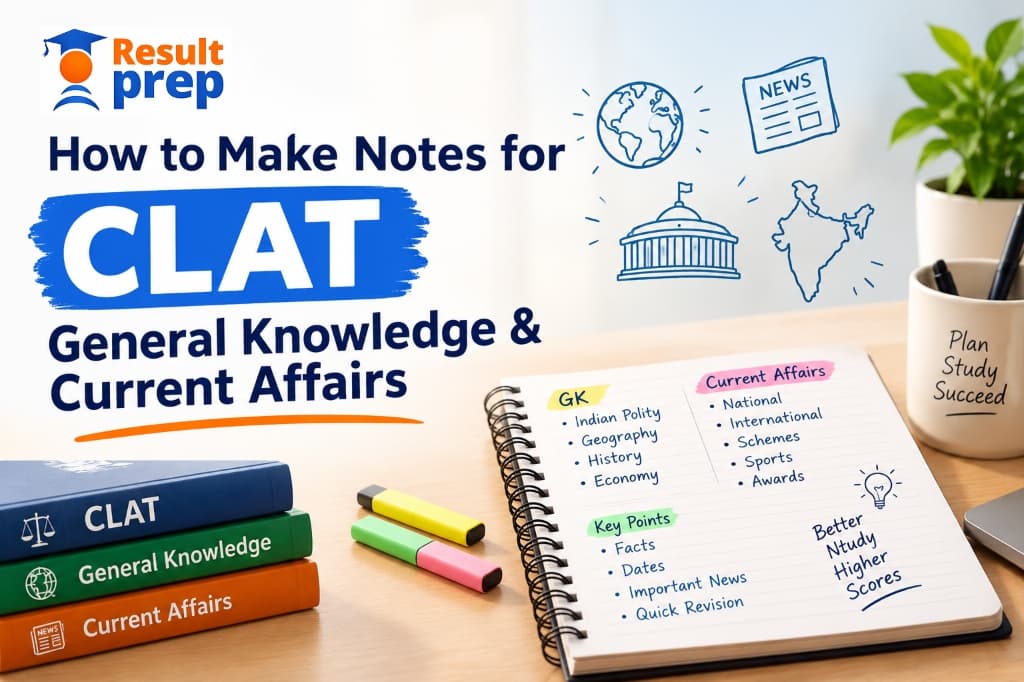
In the grueling, highly unpredictable arena of the Common Law Admission Test (CLAT), the General Knowledge and Current Affairs section remains the ultimate rank-decider. Unlike the Legal Aptitude or Logical Reasoning sections—which demand the slow, methodical extraction of principles from a given text—the GK section is a pure test of memory retrieval under extreme time pressure. A well-prepared candidate can solve 30 GK questions in under 12 minutes, saving precious time for the mathematically dense Data Interpretation sets. However, the vast majority of CLAT aspirants fail spectacularly in this section. Their failure does not stem from a lack of hard work; it stems from a catastrophic failure in data management. Driven by FOMO (Fear Of Missing Out), students hoard 200-page monthly compendiums from ten different coaching institutes, treating the passive reading of these PDFs as actual studying. They attempt to write down every single trivial fact printed in the daily newspaper, resulting in five thick notebooks filled with chaotic, unsearchable data by the end of the year. The Consortium of NLUs has entirely abandoned one-liner trivia. The modern CLAT tests passage-based, multi-dimensional understanding of complex global issues. You cannot simply memorize a date or a prime minister's name; you need structural, historical, and legal context. This 1500-word masterclass deconstructs the elite, "Issue-Based" note-making framework utilized by top-100 NLU rankers, teaching you how to build a digital "Second Brain" that guarantees massive memory retention and rapid revision.
The Fallacy of Chronological Note-Making
The first and most critical step in revolutionizing your GK preparation is completely abandoning the traditional "Chronological" note-making method taught in schools. Most students buy a physical notebook, write today’s date at the top of the page, and write down five random, disconnected news items: a sports award, a Supreme Court judgment, a new economic policy, and an international treaty. Tomorrow, they turn the page, write tomorrow's date, and repeat the process.
The Retrieval Nightmare
This chronological method is a strategic disaster for CLAT. Consider a massive, ongoing geopolitical crisis, such as the Israel-Palestine conflict or the Russia-Ukraine war. These events do not conclude in a single day; they evolve over eight to twelve months. If you make chronological notes, your data on the Russia-Ukraine war will be scattered randomly across fifty different pages in three different notebooks. When November arrives and you need to revise the entire timeline of the conflict for a CLAT passage, you will waste hours frantically flipping through pages trying to piece the story together. Your brain cannot process fragmented data. It requires continuous, narrative structures to transfer information from short-term to long-term memory.
The "Issue-Based" Digital Framework
To dominate the CLAT GK section, you must completely pivot from Chronological note-making to Issue-Based note-making. In this system, you do not organize your notes by the date the event occurred; you organize them by the underlying topic itself.
The Mathematical Superiority of Digital Notes
Because an "Issue" will expand continuously over a year, physical notebooks are fundamentally obsolete for CLAT prep. If you allocate two pages for a topic in a physical notebook, you will inevitably run out of space when the topic expands, forcing you to continue the notes fifty pages later, destroying the structure. You must use a digital database. Applications like Notion, Evernote, or Microsoft OneNote are non-negotiable requirements for a top rank. Digital notes allow you to seamlessly append new information to an existing topic indefinitely. More importantly, digital tools allow for instantaneous keyword searching—if a mock test asks a question about "Article 370," you can press Ctrl+F and instantly pull up your entire master dossier on the subject.
Establishing the Broad Buckets
To begin your Issue-Based digital system, open Notion or Evernote and create five broad "Buckets" (folders):
- Constitutional & Legal Affairs: Supreme Court judgments, new parliamentary bills, constitutional amendments.
- International Relations & Geopolitics: Global conflicts, bilateral treaties, UN summits.
- National Policies & Economics: RBI monetary policy, union budget, major government welfare schemes.
- Science, Space & Environment: ISRO/NASA missions, climate change summits (COP), major viral outbreaks.
- Miscellaneous (The One-Liners): Sports awards, Nobel prizes, significant appointments (keep this bucket very small).
The 4-Pronged Entry Method
Once you have your digital buckets established, you must standardize exactly what information goes into a specific page. When a major issue occurs (e.g., a Supreme Court ruling on Electoral Bonds), you create a new page inside your "Legal Affairs" bucket. Do not copy-paste entire paragraphs from *The Hindu*. You must synthesize the data using the strict 4-Pronged Entry Method. Every issue page must contain exactly these four headers:
1. The Trigger Event (The 'What')
A maximum of two bullet points explaining exactly why this issue is in the news today. (e.g., "The Supreme Court of India unanimously struck down the Electoral Bond Scheme as unconstitutional, citing violations of the Right to Information.")
2. The Historical Context (The 'Background')
CLAT passages rarely focus solely on the present day; they heavily test the historical background of the issue. When was this scheme originally launched? Which Finance Act amended the RBI Act to allow these bonds? You must trace the timeline back to its origin. This provides the narrative framework your brain needs to memorize the data.
3. The Core Stakeholders & Geography (The 'Who & Where')
Who are the primary actors involved? Note down the exact names of the Chief Justice who headed the bench, the name of the NGO that filed the primary petition (e.g., Association for Democratic Reforms), and the specific banks authorized to issue the bonds. For international issues, you must note the geography—what sea borders the conflicting countries? What is the capital city?
4. The Legal/Constitutional Angle (The 'CLAT Factor')
This is the most critical prong for law aspirants. Every major event has a constitutional angle. Which specific Article of the Constitution was invoked? (e.g., Article 19(1)(a) regarding freedom of speech and expression). Are there any historical landmark cases related to this? By tying current events directly to Constitutional Articles, you simultaneously prepare for both the GK section and the Legal Reasoning section.
The Art of Aggressive Consolidation
Creating this magnificent digital database is useless if you never look at it. You must establish a rigid revision protocol known as Aggressive Consolidation. Every Sunday, you must enforce a strict moratorium on reading new newspaper articles or new GK compendiums. Sunday is exclusively reserved for auditing your digital "Second Brain."
During this Sunday audit, you read through the notes you made during the week. You will often find redundancies—perhaps you created a new page for a minor update to an ongoing issue. You must merge these minor updates into the main master page. Furthermore, as months pass, certain issues that seemed incredibly important in May will become completely irrelevant by October. You must be ruthless. Delete or archive pages that have lost their national significance to prevent your database from becoming bloated. A lean, highly curated database of 150 critical issues is vastly superior to a bloated database of 1000 trivial issues.
Integrating Static GK with Current Affairs
Finally, you must understand that the Consortium does not test pure "Static GK" (history, geography) in isolation anymore. They test Static GK that is explicitly linked to a Current Affair. If the Prime Minister inaugurates a new temple, the current affair is the inauguration, but the CLAT question will ask about the specific architectural style of the temple (Dravidian vs. Nagara) or the historical dynasty that originally built it. Therefore, whenever you make a note on a current event, you must actively research and append the relevant static historical or geographical facts to the bottom of that same Notion page.
Mastering CLAT General Knowledge is not a test of who can read the most PDFs; it is a test of who possesses the most efficient data-retrieval architecture. By abandoning the chronological trap, building an Issue-Based digital matrix, strictly adhering to the 4-Pronged Entry Method, and ruthlessly consolidating your notes every Sunday, you will transform the GK section from a terrifying gamble into your most reliable, highest-scoring percentile booster.
Discussion (7)
Anjali Verma
The 'Issue-Based' digital framework changed everything. Chronological notes were destroying my revision.
Ravi Teja
How do you force yourself to do the Sunday Consolidation Ritual? I always feel too lazy to audit my notes.
Neha Gupta
The 4-Pronged Entry Method (Trigger, History, Legal, Geography) is the exact blueprint I needed.
Kunal Sharma
Does anyone share their Notion templates for CLAT GK tracking?
Siddharth Rao
I am finally moving my GK to Notion. Having one master document for 'Israel-Palestine' makes so much more sense.
Manish Das
The realization that 'Static GK is just dynamic GK's history' blew my mind.
Rahul Verma
Is it okay if I don't write down every single minor appointment and sports award?
Related Articles in CLAT Preparation
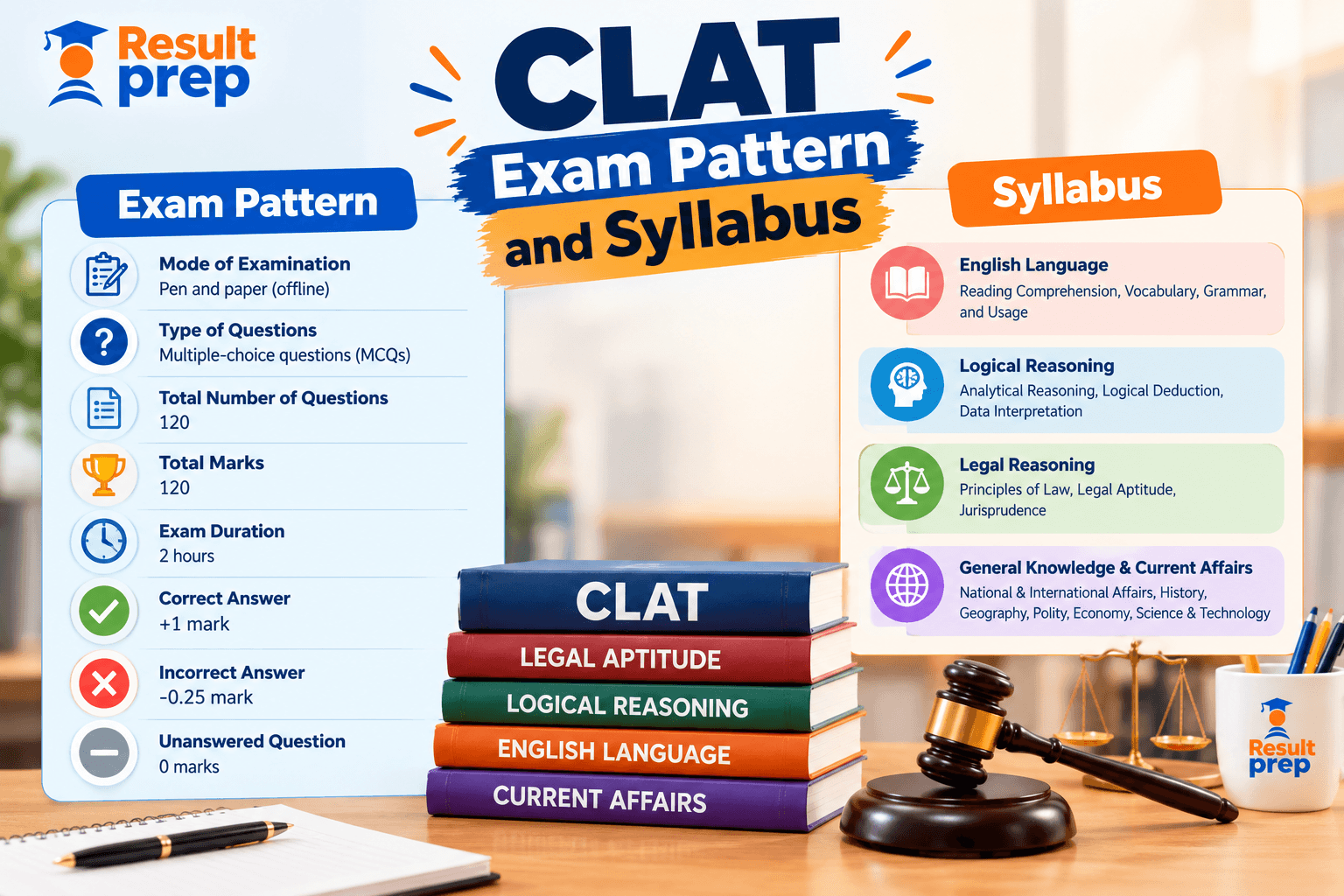
Everything Students Should Know About the CLAT Exam Pattern and Syllabus
The complete guide to the CLAT 2027 exam pattern and syllabus: 120-question passage format, 5 sectional syllabi, marking scheme, offline OMR logistics, and preparation roadmaps.
CLAT - Criteria for Eligibility: Age Range, Criteria, and Prerequisites
A complete guide to CLAT 2027 eligibility: Minimum marks in Class 12, no age limit rules, stream flexibility, reservation categories, and CLAT UG vs. PG comparison.

How to Apply for CLAT: A Step-By-Step Guide For Law Aspirants
A complete walkthrough of the CLAT application process: Step-by-step registration on the Consortium portal, document specifications, fee payment, common pitfalls, and post-submission steps.