Indian Contract Law: An Overview of the Indian Contract Act, 1872 – Principles, Essentials, and Legal Framework
A comprehensive overview of Indian contract law, exploring the historical background, essential elements, performance, breach, and modern developments under the Indian Contract Act, 1872.

Part I: Introduction, Meaning of Contract, Essential Elements, and Formation of a Valid Contract
Introduction
Contracts are an integral part of everyday life and form the backbone of commercial as well as personal transactions. Every individual, knowingly or unknowingly, enters into several contracts each day. Purchasing groceries, booking a cab through a mobile application, subscribing to an online streaming service, opening a bank account, buying a railway ticket, or accepting an employment offer are all examples of contractual relationships. Without the law of contracts, modern commerce and economic development would become uncertain and chaotic.
Contract law provides certainty and predictability by ensuring that promises intended to create legal obligations are enforceable by law. It protects the legitimate expectations of parties and promotes trust in commercial transactions. A person who suffers loss because another party fails to perform contractual obligations may seek remedies through the courts, thereby ensuring fairness and accountability.
In India, contractual relationships are primarily governed by the Indian Contract Act, 1872, one of the oldest commercial statutes in force. The Act codifies the general principles relating to contracts, including their formation, performance, discharge, breach, and remedies. Although enacted during the colonial period, the Act continues to govern a vast range of contractual relationships and remains one of the most significant statutes in Indian commercial jurisprudence.
This article provides a comprehensive overview of Indian contract law, discussing the essential elements of a valid contract, different types of contracts, performance, breach, remedies, and modern developments.
Historical Background of the Indian Contract Act, 1872
Prior to the enactment of the Indian Contract Act, contractual disputes in India were decided according to English common law principles, local customs, and equitable doctrines. The absence of a uniform legal framework often resulted in inconsistent judicial decisions.
To establish certainty in commercial transactions, the British Indian Legislature enacted the Indian Contract Act, 1872, which came into force on 1 September 1872.
Initially, the Act governed almost every branch of contract law, including contracts of sale, partnership, agency, indemnity, guarantee, bailment, pledge, and negotiable instruments. Over time, several subjects were separated into independent legislation, such as:
- the Sale of Goods Act, 1930,
- the Indian Partnership Act, 1932,
- the Negotiable Instruments Act, 1881.
Despite these changes, the Indian Contract Act continues to regulate the fundamental principles applicable to contracts throughout India.
Meaning of Contract
The word "contract" originates from the Latin expression contractus, meaning an agreement or obligation undertaken between parties.
Legally, a contract is an agreement recognised and enforced by law. Every contract begins as an agreement, but not every agreement becomes a contract. Only those agreements that satisfy the legal requirements prescribed by the Indian Contract Act acquire the status of an enforceable contract.
Section 2(h) of the Indian Contract Act, 1872 provides:
"An agreement enforceable by law is a contract."
This concise definition emphasises two essential components:
- there must be an agreement between two or more parties; and
- such agreement must be legally enforceable.
Thus, social, moral, or domestic arrangements generally do not constitute contracts because the parties do not intend to create legal obligations.
Nature and Importance of Contract Law
Contract law performs several important functions in society.
1. Facilitates Commercial Transactions
Business organisations rely upon contracts for the purchase and sale of goods, banking transactions, insurance, transportation, construction projects, and international trade.
2. Protects Legitimate Expectations
Parties entering into agreements expect that the promises made will be honoured. Contract law protects these expectations by providing legal remedies in cases of breach.
3. Promotes Economic Development
A stable contractual framework encourages investment, trade, entrepreneurship, and industrial growth by providing certainty in commercial dealings.
4. Encourages Good Faith
Although Indian contract law does not expressly recognise a general duty of good faith in every contract, courts increasingly expect parties to act honestly and fairly, particularly in commercial relationships.
Agreement and Contract
The distinction between an agreement and a contract is fundamental.
Section 2(e) defines an agreement as:
"Every promise and every set of promises forming consideration for each other is an agreement."
An agreement becomes a contract only when it satisfies all the legal requirements prescribed by the Act.
Thus:
Agreement + Enforceability by Law = Contract
For example, two friends agree to have dinner together on Sunday. This is merely a social arrangement and cannot be enforced in a court of law.
Conversely, where a builder agrees to construct a house in consideration of an agreed price, both parties intend to create legal obligations. Such an agreement constitutes a valid contract.
Offer or Proposal
The first step in the formation of every contract is the making of an offer.
Section 2(a) defines a proposal as:
"When one person signifies to another his willingness to do or abstain from doing anything with a view to obtaining the assent of that other person, he is said to make a proposal."
The person making the proposal is called the promisor or offeror, while the person to whom it is made is called the promisee or offeree.
Offers may be:
- Express or implied,
- General or specific,
- Positive or negative.
For example, displaying goods with a price tag in a supermarket is generally considered an invitation to offer rather than an offer itself. The customer's act of presenting the goods at the billing counter constitutes the offer, which the shopkeeper may accept by completing the sale.
Acceptance
Acceptance converts a proposal into a promise.
Section 2(b) provides:
"When the person to whom the proposal is made signifies his assent thereto, the proposal is said to be accepted."
For acceptance to be valid, it must be:
- absolute,
- unconditional,
- communicated,
- made in the prescribed manner (where specified),
- made while the offer remains open.
A conditional or qualified acceptance amounts to a counter-offer rather than acceptance.
The famous English decision in Carlill v. Carbolic Smoke Ball Co. (1893) established that acceptance may sometimes be communicated by conduct, particularly in unilateral contracts.
Promise
A proposal, when accepted, becomes a promise.
A contract generally consists of reciprocal promises made by both parties.
For example:
A agrees to sell his car to B for ₹6,00,000.
A promises to deliver the car.
B promises to pay the agreed price.
These reciprocal promises together constitute the contractual relationship.
Consideration
Consideration is one of the most essential elements of a valid contract.
Section 2(d) defines consideration as:
"When, at the desire of the promisor, the promisee or any other person has done or abstained from doing, or does or abstains from doing, or promises to do or abstain from doing something, such act, abstinence or promise is called consideration."
Simply put, consideration means "something in return."
It may consist of:
- money,
- goods,
- services,
- an act,
- an omission,
- or even a promise to act in the future.
The general rule is:
"No consideration, no contract."
However, the Indian Contract Act recognises certain exceptions where agreements without consideration remain enforceable, such as agreements made out of natural love and affection, promises to compensate for voluntary services, and promises to pay time-barred debts under specified conditions.
Essential Elements of a Valid Contract
For an agreement to become a legally enforceable contract, the following conditions must ordinarily be satisfied:
- A lawful offer and valid acceptance.
- Intention to create legal relations.
- Lawful consideration.
- Competent parties.
- Free consent.
- Lawful object.
- Certainty of terms.
- Possibility of performance.
- The agreement must not be expressly declared void by law.
Failure to satisfy any of these requirements may render the agreement void, voidable, or unenforceable.
Part II: Capacity to Contract, Free Consent, Void Agreements, Performance, and Quasi Contracts
In Part I, we examined the meaning of contracts, their historical development, offer, acceptance, consideration, and the essential ingredients of a valid contract. However, these elements alone are insufficient to create a legally enforceable agreement. The Indian Contract Act, 1872 further requires that the parties must possess legal capacity, consent must be free, the object of the agreement must be lawful, and the contract must be capable of performance. This part explores these essential principles in detail.
Capacity to Contract
One of the most fundamental requirements of a valid contract is that the parties entering into it must be legally competent.
Section 11 of the Indian Contract Act, 1872 provides that every person is competent to contract if he:
- has attained the age of majority;
- is of sound mind; and
- is not disqualified from contracting under any law to which he is subject.
If any of these conditions is absent, the agreement may not be enforceable.
Minor's Agreement
A person who has not attained the age of majority lacks contractual capacity. Under the Indian Majority Act, 1875, a person ordinarily attains majority upon completing eighteen years of age, though in certain circumstances it may extend to twenty-one years.
The landmark decision in Mohori Bibee v. Dharmodas Ghose (1903) firmly established that an agreement entered into by a minor is void ab initio, meaning it is void from the very beginning. The Privy Council held that a minor cannot ratify such an agreement upon attaining majority because there was never a valid contract in existence.
However, the law recognises certain exceptions. A minor may enforce a contract that is for his benefit, such as a scholarship agreement or a contract for educational services. Furthermore, under Section 68 of the Act, a supplier of necessaries suitable to the minor's condition in life is entitled to reimbursement from the minor's property.
Persons of Unsound Mind
Section 12 provides that a person is of sound mind for the purpose of making a contract if, at the time of entering into it, he is capable of understanding its nature and forming a rational judgment regarding its effects upon his interests.
Thus, a person suffering from temporary insanity, intoxication, or mental illness may be incapable of entering into a valid contract during the period of incapacity. Conversely, a person who ordinarily suffers from mental illness but enters into an agreement during a lucid interval may validly contract.
Persons Disqualified by Law
Certain persons are specifically disqualified from entering into contracts under various statutes. These include alien enemies, foreign sovereigns in certain circumstances, insolvents, and corporations acting beyond their legal powers. Agreements entered into by such persons may be void or unenforceable depending upon the governing law.
Free Consent
Consent forms the very foundation of every contract. Section 13 states that two or more persons are said to consent when they agree upon the same thing in the same sense, a principle often described by the Latin expression consensus ad idem.
However, mere consent is insufficient. The consent must also be free.
Section 14 provides that consent is free when it is not caused by:
- coercion,
- undue influence,
- fraud,
- misrepresentation, or
- mistake.
If consent is obtained through any of these means, the validity of the contract may be affected.
Coercion
Section 15 defines coercion as committing or threatening to commit any act forbidden by the Indian Penal Code or unlawfully detaining property with the intention of compelling another person to enter into an agreement.
For example, if A threatens to lodge a false criminal complaint unless B signs a property transfer deed, B's consent is obtained through coercion. Such a contract is voidable at the option of B.
Undue Influence
Undue influence arises where one party dominates the will of another and uses that position to obtain an unfair advantage.
Relationships such as parent and child, doctor and patient, solicitor and client, trustee and beneficiary often involve a possibility of undue influence.
Courts carefully examine such transactions to ensure that consent was freely given.
Fraud
Fraud consists of intentional deception designed to induce another person to enter into a contract.
Section 17 recognises several forms of fraud, including:
- false statements knowingly made,
- active concealment of material facts,
- promises made without intention of performance,
- deceptive acts, and
- acts specifically declared fraudulent by law.
A contract induced by fraud is voidable at the option of the aggrieved party, who may also claim damages.
Misrepresentation
Misrepresentation differs from fraud because the false statement is made honestly without any intention to deceive.
Although the representation is incorrect, the person making it genuinely believes it to be true.
The injured party may rescind the contract, but damages are generally unavailable unless negligence or fraud is also established.
Mistake
Mistake may relate either to facts or law.
A bilateral mistake of essential fact renders an agreement void because there is no real consensus between the parties.
For example, if both parties believe that a specific cargo ship is still afloat when it had already sunk before the contract was made, the agreement is void due to mutual mistake.
However, a mistake of Indian law generally does not excuse contractual obligations.
Lawful Consideration and Lawful Object
Even where offer, acceptance, and consent exist, a contract cannot be enforced unless both the consideration and the object are lawful.
Section 23 declares that consideration or object is unlawful if:
- it is forbidden by law;
- defeats the provisions of any law;
- is fraudulent;
- causes injury to another person or property;
- is immoral; or
- is opposed to public policy.
For example, agreements for illegal trafficking, bribery, gambling prohibited by law, or agreements intended to obstruct justice are void.
Void Agreements
Section 2(g) provides that an agreement not enforceable by law is void.
Certain agreements are expressly declared void by the Indian Contract Act, including:
- agreements without consideration (subject to recognised exceptions),
- agreements in restraint of marriage,
- agreements in restraint of trade,
- agreements in restraint of legal proceedings,
- wagering agreements,
- uncertain agreements, and
- agreements to perform impossible acts.
These agreements never acquire legal enforceability.
Void Contracts and Voidable Contracts
A void contract is one that was initially valid but subsequently becomes unenforceable because of supervening circumstances.
For example, where the subject matter of the contract is destroyed before performance becomes due, the contract may become void under the doctrine of frustration.
A voidable contract, on the other hand, remains enforceable until the aggrieved party chooses to rescind it.
Contracts induced by coercion, undue influence, fraud, or misrepresentation are classic examples of voidable contracts.
Contingent Contracts
Sections 31 to 36 deal with contingent contracts.
A contingent contract is one whose performance depends upon the happening or non-happening of an uncertain future event collateral to the contract.
For example:
A promises to pay B ₹10 lakh if B's factory is destroyed by fire.
The obligation arises only if the specified event actually occurs.
Insurance contracts are among the most common examples of contingent contracts.
Performance of Contracts
Performance is the normal method by which contractual obligations are discharged.
Section 37 provides that the parties must either perform or offer to perform their respective promises unless performance is excused by law.
Performance may be:
- Actual Performance, where obligations are fully carried out; or
- Attempted Performance (Tender), where a party offers to perform but the other party refuses to accept.
A valid tender generally discharges the performing party from further liability.
Reciprocal Promises
Many contracts involve mutual promises made by both parties.
The Indian Contract Act recognises three broad categories of reciprocal promises.
Mutual and Independent Promises
Each party performs independently of the other.
For example, a seller agrees to deliver goods on 1 July, while the buyer agrees to make payment on 15 July.
Mutual and Dependent Promises
The performance of one promise depends upon prior performance by the other party.
For instance, payment may become due only after successful delivery of goods.
Mutual and Concurrent Promises
Both parties must perform simultaneously.
A common example is a cash sale where payment and delivery occur at the same time.
Quasi Contracts
One of the unique features of the Indian Contract Act is its recognition of quasi-contracts.
Despite the name, a quasi-contract is not a contract because it does not arise from mutual agreement.
Instead, it is an obligation imposed by law to prevent one person from being unjustly enriched at the expense of another.
The principal categories of quasi-contracts include:
- supply of necessaries to persons incapable of contracting;
- reimbursement of payments made by an interested person;
- liability for enjoying the benefit of a non-gratuitous act;
- responsibility of a finder of lost goods;
- recovery of money or goods delivered by mistake or coercion.
These obligations are founded upon principles of equity, justice, and good conscience rather than consent.
Conclusion to Part II
The validity of a contract depends not merely upon the existence of offer and acceptance but also upon the legal capacity of the parties, the freedom of their consent, the lawfulness of the object, and the possibility of performance. The Indian Contract Act carefully balances the principle of freedom of contract with the need to protect individuals against fraud, coercion, exploitation, and illegality. By doing so, it promotes fairness, certainty, and confidence in commercial and personal transactions.
Part III: Discharge, Breach of Contract, Remedies, Special Contracts, and Contemporary Developments
In the previous parts, we examined the formation of contracts, the essential ingredients of a valid contract, competency of parties, free consent, contingent contracts, and quasi-contracts. This final part discusses how contracts come to an end, the legal consequences of breach, the remedies available to the aggrieved party, special contractual relationships, and the growing relevance of contract law in the digital age.
Discharge of Contract
A contract does not continue indefinitely. It comes to an end when the rights and obligations of the parties cease to exist. This termination of contractual obligations is known as the discharge of a contract.
The Indian Contract Act recognises several modes by which a contract may be discharged.
1. Discharge by Performance
Performance is the most natural and desirable method of discharging a contract. When both parties fulfil their respective promises according to the terms of the agreement, the contract stands discharged.
For example, if A agrees to sell his motorcycle to B for ₹1,00,000 and A delivers the motorcycle while B pays the agreed price, the contract is discharged by performance.
Performance may be:
- Actual Performance, where obligations are completely fulfilled; or
- Tender or Attempted Performance, where one party offers to perform but the other party refuses to accept such performance.
A valid tender generally relieves the performing party from future liability.
2. Discharge by Mutual Agreement
Since contracts arise through mutual consent, they may also be discharged through mutual consent.
The parties may agree to:
- substitute a new contract (Novation),
- cancel the existing contract (Rescission),
- alter its terms (Alteration), or
- waive performance altogether (Remission).
Such arrangements are recognised under Sections 62 and 63 of the Indian Contract Act.
3. Discharge by Impossibility of Performance
Sometimes performance becomes impossible after the contract has been formed.
Section 56 embodies the Doctrine of Frustration, which provides that a contract becomes void when an act becomes impossible or unlawful after its formation.
Impossibility may arise due to:
- destruction of the subject matter;
- death or incapacity in contracts involving personal skill;
- change in law;
- war or government restrictions;
- natural disasters.
For instance, if A contracts to hire a hall for a concert but the hall is destroyed by fire before the scheduled event, the contract becomes void due to frustration.
However, mere commercial hardship, increase in expenses, or reduction in profits does not amount to frustration.
4. Discharge by Operation of Law
A contract may also be discharged automatically by operation of law.
Examples include:
- insolvency,
- merger of rights,
- material alteration of the contract without consent, and
- expiry of the limitation period.
5. Discharge by Breach
Where one party fails to perform contractual obligations, the other party may treat the contract as discharged and seek appropriate legal remedies.
Breach of Contract
A breach occurs when a party fails to perform a contractual obligation without lawful justification.
The Indian Contract Act recognises two principal types of breach.
Actual Breach
Actual breach occurs when a party fails to perform obligations on the due date or performs them defectively.
For example, if a contractor agrees to complete construction by 30 June but abandons the project before completion, an actual breach has occurred.
Anticipatory Breach
An anticipatory breach occurs when one party clearly communicates, before the due date of performance, that he does not intend to perform the contract.
The innocent party may either:
- terminate the contract immediately and sue for damages; or
- wait until the date fixed for performance.
If the innocent party elects to wait, he assumes the risk that the contract may subsequently become impossible due to supervening events.
Remedies for Breach of Contract
The objective of contractual remedies is not to punish the defaulting party but to place the aggrieved party, as far as possible, in the position he would have occupied had the contract been properly performed.
1. Damages
Damages constitute the most common remedy for breach of contract.
Section 73 provides that compensation is recoverable for losses naturally arising from the breach or which the parties knew were likely to result when they entered into the contract.
The celebrated English decision in Hadley v. Baxendale (1854) laid down the governing principle for awarding contractual damages. The court held that damages are recoverable only for losses that:
- arise naturally from the breach; or
- were within the reasonable contemplation of both parties at the time of contracting.
Types of Damages
General Damages: These compensate losses that naturally and directly result from the breach.
Special Damages: Special damages compensate losses arising from special circumstances known to both parties at the time the contract was made.
Nominal Damages: Where a legal right has been violated but no substantial loss is proved, the court may award nominal damages.
Liquidated Damages: These are predetermined amounts agreed upon by the parties in the event of breach. Indian courts award reasonable compensation under Section 74, regardless of whether the amount stipulated is described as liquidated damages or a penalty.
Exemplary Damages: Punitive or exemplary damages are generally not awarded for breach of contract, except in exceptional circumstances recognised by law.
Duty to Mitigate Loss
The injured party cannot remain passive and allow losses to accumulate unnecessarily.
He is expected to take reasonable steps to minimise the damage resulting from the breach.
For example, if a supplier wrongfully refuses to deliver goods, the buyer should attempt to procure similar goods from another source wherever reasonably possible.
Specific Performance
Monetary compensation may not always provide adequate relief.
The Specific Relief Act, 1963 empowers courts to direct actual performance of contractual obligations where damages are insufficient.
Specific performance is commonly granted in disputes involving:
- sale of immovable property,
- unique goods,
- intellectual property,
- commercial agreements where monetary compensation would be inadequate.
However, courts generally refuse specific performance where contracts involve personal services or require continuous supervision.
Injunction
An injunction is a judicial order restraining a party from committing or continuing a wrongful act.
For instance, where an employee has agreed not to disclose confidential business information, a court may issue an injunction restraining disclosure.
Quantum Meruit
The expression Quantum Meruit literally means "as much as deserved."
It enables a person to recover reasonable remuneration for work already performed when:
- the contract becomes void;
- one party prevents performance;
- services are accepted without complete performance.
The principle ensures that no person is unjustly enriched at another's expense.
Special Contracts under the Indian Contract Act
Besides general contractual principles, the Indian Contract Act governs several special contractual relationships.
Bailment
Sections 148 to 181 deal with Bailment.
Bailment refers to the delivery of goods by one person (the Bailor) to another (the Bailee) for a specific purpose, upon the condition that the goods shall be returned or otherwise dealt with according to the directions of the bailor after the purpose is accomplished.
Examples include:
- depositing jewellery in a bank locker,
- giving a vehicle for repair,
- storing goods in a warehouse.
Ownership remains with the bailor while possession temporarily passes to the bailee.
Pledge
A pledge is a special form of bailment where goods are delivered as security for repayment of a debt or performance of an obligation.
The person delivering the goods is called the Pawnor, while the person receiving them is known as the Pawnee.
Banks commonly obtain pledges over jewellery, shares, or other movable property as collateral security.
Contract of Agency
Agency enables one person to act on behalf of another.
The person authorising the act is known as the Principal, while the person acting on his behalf is called the Agent.
The governing principle is expressed in the Latin maxim:
Qui facit per alium facit per se ("He who acts through another acts himself.")
An important feature of agency under Section 185 is that no consideration is necessary for creating an agency.
Agency plays a vital role in modern commerce, banking, insurance, international trade, and corporate transactions.
Landmark Cases in Indian Contract Law
Several judicial decisions have shaped the development of Indian contract law.
- Mohori Bibee v. Dharmodas Ghose (1903): Established that a minor's agreement is void from the beginning.
- Lalman Shukla v. Gauri Dutt (1913): Held that a person cannot claim a reward without knowledge of the offer, thereby emphasising the necessity of communication.
- Balfour v. Balfour (1919): Clarified that domestic or social arrangements generally do not create legal obligations.
- Carlill v. Carbolic Smoke Ball Co. (1893): Recognised unilateral contracts and acceptance through performance.
- Hadley v. Baxendale (1854): Laid down the modern rule governing recovery of contractual damages.
Contract Law in the Digital Era
The rapid growth of technology has transformed the manner in which contracts are concluded.
Today, contracts are routinely entered into through:
- e-commerce websites,
- mobile applications,
- online banking,
- electronic signatures,
- digital payment platforms,
- cloud-based services.
The Information Technology Act, 2000 grants legal recognition to electronic records and digital signatures, thereby facilitating electronic contracting.
Courts have consistently recognised the validity of click-wrap agreements, browse-wrap agreements (subject to adequate notice), and electronic communications, provided the essential requirements of a valid contract are satisfied.
As artificial intelligence, blockchain technology, and smart contracts become increasingly prevalent, Indian contract law will continue evolving to address novel legal challenges while preserving its foundational principles.
Conclusion
The Indian Contract Act, 1872 remains one of the cornerstones of India's commercial legal framework. Despite being enacted over 150 years ago, its principles continue to regulate millions of personal and commercial transactions every day. The Act embodies the fundamental ideals of consensus, fairness, free consent, lawful consideration, and enforceability, providing certainty and stability to contractual relationships.
Modern commerce has significantly expanded the scope of contract law. From traditional agreements for the sale of goods to complex international transactions, electronic commerce, digital platforms, and technology-driven contracts, the principles of contract law continue to evolve while retaining their foundational character. Judicial interpretation has played a crucial role in ensuring that the Act remains relevant in the face of changing economic realities.
A sound understanding of contract law is indispensable not only for lawyers and judges but also for entrepreneurs, consumers, professionals, and every individual who enters into legal relationships. As commerce becomes increasingly global and technology-driven, the importance of contract law in safeguarding rights, promoting business confidence, and ensuring justice will continue to grow.
Discussion (7)
Neha Gupta
This is a very insightful article. The strategies mentioned are incredibly practical.
Vikram Mathur
I've been preparing for a few months now and these tips perfectly align with what my mentors have been saying.
Kavya Sharma
Do you have any offline batches starting soon? I need help with the advanced topics.
Rahul Kapoor
Bookmarked! I will be revisiting this guide before my mock tests next month.
Simran Reddy
The point about consistent daily practice cannot be overstated. Great read.
Manish Das
Thank you for breaking down such a complex topic into actionable steps.
Priya Rao
I shared this with my entire study group. We were making half the mistakes listed here.
Related Articles in CLAT Preparation
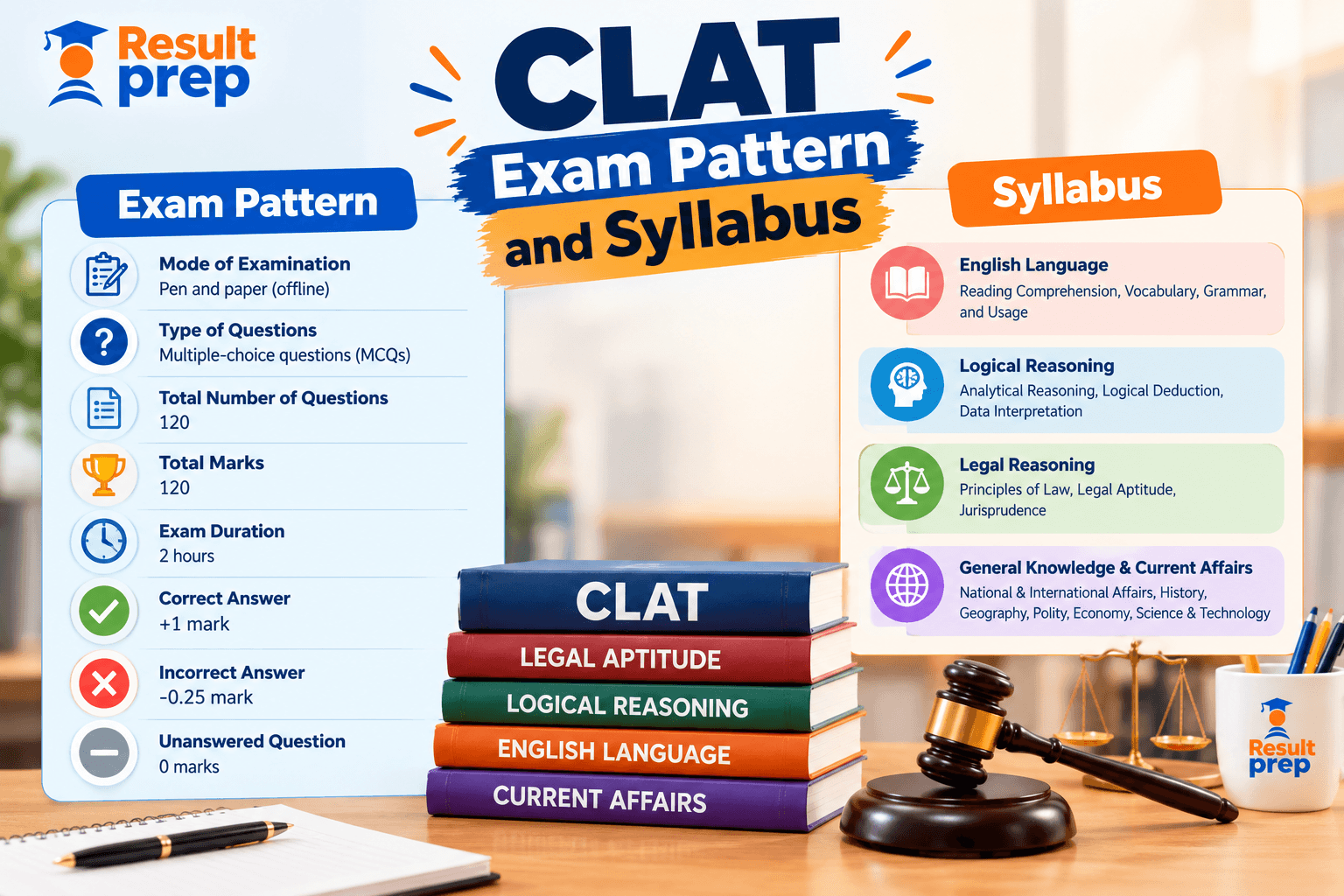
Everything Students Should Know About the CLAT Exam Pattern and Syllabus
The complete guide to the CLAT 2027 exam pattern and syllabus: 120-question passage format, 5 sectional syllabi, marking scheme, offline OMR logistics, and preparation roadmaps.

CLAT - Criteria for Eligibility: Age Range, Criteria, and Prerequisites
A complete guide to CLAT 2027 eligibility: Minimum marks in Class 12, no age limit rules, stream flexibility, reservation categories, and CLAT UG vs. PG comparison.

How to Apply for CLAT: A Step-By-Step Guide For Law Aspirants
A complete walkthrough of the CLAT application process: Step-by-step registration on the Consortium portal, document specifications, fee payment, common pitfalls, and post-submission steps.